
With an eye to develop a full fledged multi-layer Ballistic Missile Defence system, India is likely to test-fire its indigenously designed and developed Advanced Air Defence missile from the Integrated Test Range off Orissa coast on Sunday.
India, on Wednesday, successfully test fired a version of nuclear-capable 'Prithvi-II' ballistic missile with a range of 350 kms from the Integrated Test Range at Chandipur,off the Orissa coast.
Observers of India's struggle to design and build defence equipment might wonder why the indigenous missile programme has been so much more successful than many other projects that the Defence Research and Development Organisation has taken up.

KCNA said the new type of surface-to-ship cruise missile is designed to hit 'any enemy group of battleships' that threatened the country.
India has developed a missile defence shield which can be put in place at short notice to protect at least two cities, bringing the country on par with an elite group of nations. The shield, developed by the Defence Research and Development Organisation, has been tested successfully. An incoming ballistic missile with the range of up to 2,000 km can be destroyed by it. The system is to be upgraded to the range of 5,000 km by 2016.
"We are also enough nuclear capable," Defence Minister A K Antony said.

In a major boost to its military might, India on Wednesday successfully test-fired surface-to-surface strategic missile Agni-5 that can strike targets at ranges up to 5,000 km with a very high degree of accuracy, officials said.

Dhanush has a payload capacity of 500 kg and is capable of carrying both conventional and nuclear warheads. It can hit both sea and shore-based targets.

India on Friday successfully test-fired its indigenously developed nuclear-capable Agni-I ballistic missile with a strike range of 700 km from a test range off Odisha coast as part of a user trial by the army.

Early this week, the US imposed sanctions on suppliers to Pakistan's ballistic missile programme, including three companies from China.
The proposal is also important as it comes at a time when the Indian forces are working on the creation of a rocket force which has been in discussion at the highest levels in the Defence Ministry.
"If you have a laser based system on an airborne or seaborne platform, it can travel at the speed of light and in a few seconds, we can kill a ballistic missile coming towards us," DRDO's Air Defence Programme Director V K Saraswat told PTI in New Delhi.
The DRDO says the programme has now reached maturity, and that international sanctions cannot hurt it. There is also a degree of self-confidence in the DRDO, which allows it to acknowledge the role played by other countries. International collaboration is no longer a bad word.
Pakistan on Saturday test-fired a long-range ballistic missile capable of carrying nuclear and conventional warheads and hitting targets within India. The test-firing of the Shaheen-II or Hatf-VI surface-to-surface ballistic missile the first missile test since Pakistan's new government assumed office last month was witnessed by Prime Minister Yousuf Raza Gillani.

In the wake of continued heated rhetoric from North Korea, the United States is deploying a ballistic missile defence system in Pacific Island of Guam.

The Hague Code of Conduct against Ballistic Missile Proliferation is a toothless mechanism, but it may well end up serving India's interests, says Ajay Lele.

The new missile could deliver 2,000 to 3,500 kilograms of payload to any point in the continental US, notes Rajaram Panda.
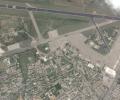
Pakistan's Prime Minister Shehbaz Sharif admitted that India's ballistic missiles hit Nur Khan Airbase and other sites on May 10, a rare acknowledgement that contradicts Pakistan's usual stance of denial when it comes to Indian military action.
Pakistan on Monday test-fired the Shaheen-II long-range ballistic missile for the second time in three days, which can carry nuclear and conventional warheads and hit targets within India. The Shaheen-II or Hatf-VI surface-to-surface ballistic missile, which has a range of 2,000 km, was launched for the first time during a field training exercise by the army's Strategic Forces Command, the military said in a statement.
The People's Liberation Army Rocket (Missile) Force tested the new missile in the Bohai Sea.
DRDO's latest test towards developing an anti-ballistic missile shield, to protect Indian targets against nuclear-tipped ballistic missiles fired from Pakistan or China will provide a technology that is akin to striking a bullet with a bullet, say Ajai Shukla

The trade relationship between India and the United States has been strained by the imposition of 25% tariff by the US on Indian goods.

The United States has started deploying the first elements of its advanced Terminal High Altitude Area Defense anti-missile system at the Osan Air Base in South Korea after North Korea conducted test of four ballistic missiles which broke international sanctions.
Buoyed by the string of successes with the intermediate range ballistic missile Agni-III, India is planning to test a missile with 5,000 km range soon. The launching of the 5,000-km range missile would entail strapping a third stage booster rocket on Agni-III missiles powered by a solid fuel propellant. The test of the next series of Agni missiles will propel the country into the select group of nations which have long range ballistic missiles.
Once Agni-3 and Agni-5 are inducted into the forces, all the cities in China and Pakistan will be in India's range, Defence Research and Development Organisation Chief V K Saraswat said.

Powering the Agni-1P will be the cutting-edge technologies developed for the Agni-4 and Agni-5 missiles.

Halevi's remarks came after Hezbollah fired a missile at central Israel on early Wednesday and Israel responded with airstrikes, which have killed 569 people and wounded 1,835 others, Al Jazeera reported.
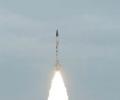
Seeking to enhance its precision strike capabilities, India is planning to replace its 150 km-range Prithvi ballistic missiles with the newly developed quick reaction Prahar missiles.

Saraswat played a key role in developing a series of missiles at a time when India faced tight international technology sanctions.

United States President Donald Trump has expressed strong disapproval of Israel and Iran 'violating the ceasefire' he announced earlier in the day and said the two countries have been fighting 'so long and so hard that they don't know what the f*** they're doing'.

Pakistan has expressed serious concern over India's recent development of an anti-ballistic missile system

Earlier, United States Secretary of State Rex Tillerson urged the international community to increase pressure on North Korea, saying that failing to do so would bring 'catastrophic consequences'.

In 2013, India had displayed the Inter Continental Ballistic Missile Agni V during the Republic Day Parade. The chief guest at that time was Bhutanese King Jigme Khesar Namgyel Wangchuck.

'In today's launch, the 'Pralay' missile was tested for heavier payload and different range to prove the precision and lethality of the weapon'
The missile will be capable of shooting down enemy ballistic missiles, aircraft, helicopters, drones, surveillance aircraft and AWACS (Airborne Warning and Control Systems) aircraft from a range of around 70 km.
Pakistan on Tuesday fired the nuclear-capable Ghauri ballistic missile with a range of 1,300 kilometres that can hit targets in India.

Describing the trial as a "complete success", they said all mission objectives were met during the test-fire. All radars, tracking systems and range stations tracked and monitored the flight performance of the missile, which was launched with support of a mobile launcher.

On board the INS Vikrant, the supreme commander of India's defence services witnessed several naval operations including a MiG 29K take-off and landing, missile firing drills from warship and submarine operations.

Pakistan should also be accorded the same 'privilege', the Global Times said.

Possible convergence of interest among China, Pakistan, and Bangladesh may result in serious implications for India's stability and security dynamics, Chief of Defence Staff General Anil Chauhan said on Tuesday.
